
College moves fast. One lecture can cover an entire high school chapter—then the professor casually says, “This will be on the midterm.” If you’ve ever left class with a page full of random phrases and zero understanding, you’re not alone. What is the best way to take notes in university? The honest answer: it depends on the course, the professor, and how your brain learns—but there are reliable systems that work across majors when you use them intentionally.
This guide breaks down the best note-taking methods for university students, shows when to use each one, and gives you a simple after-class routine (the part most students skip) that turns notes into higher exam scores.
Why your note-taking method matters more than how “neat” your notes look
In university, notes aren’t a scrapbook. They’re a tool for thinking.
Good notes help you:
- Track what your professor emphasizes (which is often different from the textbook)
- Reduce cognitive load during lectures so you can stay present
- Build a foundation for active recall (the real driver of long-term memory)
- Create a cleaner path to exam prep, essays, labs, and problem sets
The goal isn’t “write everything.” The goal is to capture the lesson’s structure, reasoning, and testable ideas—then review them in a way that sticks.
The biggest note-taking mistake most students make (and how to fix it)
Mistake: treating notes like a transcript.
Many university students repeat the same habits without realizing they’re hurting their learning. These are the most common note-taking mistakes college students make—and how to fix them before exams expose the problem.
When you try to write down every sentence, three things happen:
- You fall behind and panic-write junk.
- You stop listening for meaning.
- Your notes become impossible to study from.
Fix: write for your future self.
A strong note-taking mindset sounds like:
- “What is the main claim here?”
- “What example did they use to prove it?”
- “What would a test question look like?”
That shift alone can instantly improve your lecture notes—even before you change the method.
Match the note-taking method to the class: a quick decision guide
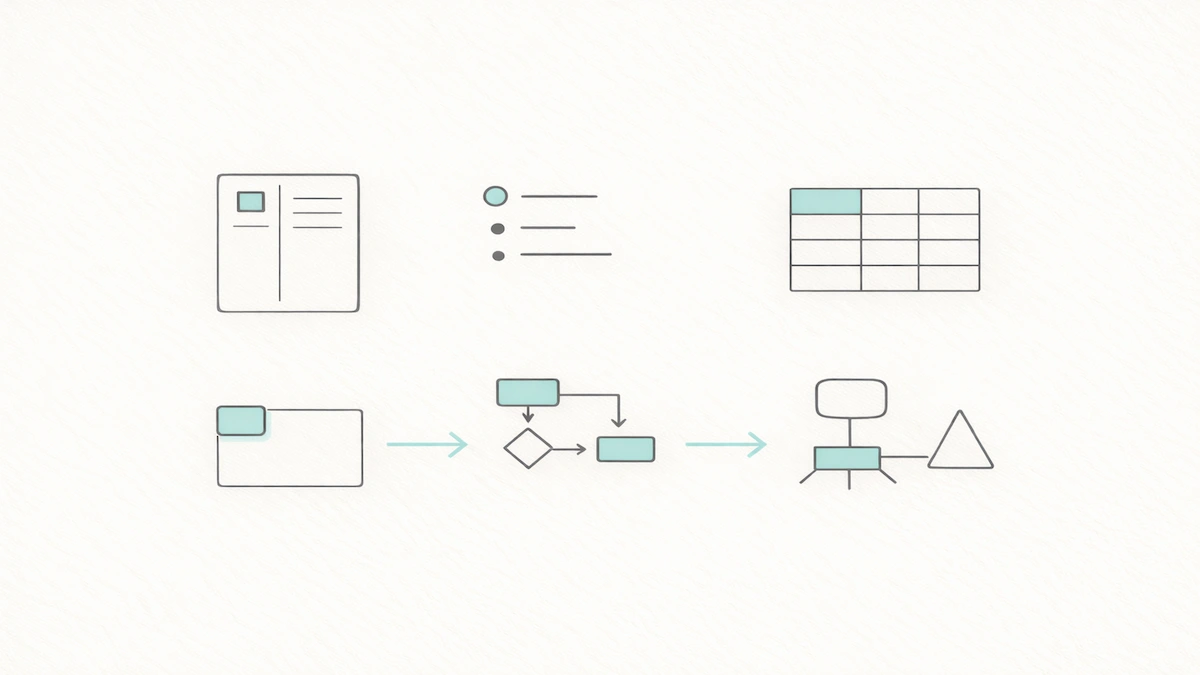
Different courses demand different types of thinking. Use this cheat sheet:
- Lecture-heavy humanities (Psych, History, Sociology): Cornell Method or Outline Method
- Concept-heavy STEM (Bio, Chem, CS theory): Concept maps + short definitions + practice prompts
- Math/Engineering (problem-solving): Problem-first notes + worked examples + error log
- Discussion-based seminars: Question-led notes + themes + quotes + your reactions
- Labs: Procedure + observations + “why this step matters” + troubleshooting notes
If you’ve been forcing one method across every class, this is where your notes start improving immediately.
The Cornell Method (best for most lecture-based classes)
If your professor talks in organized blocks (concept → explanation → example), the Cornell Method is a powerhouse. It also sets you up to study without having to rewrite everything later.
How it works
If this method sounds useful, here’s a full step-by-step explanation of the Cornell note-taking method for college students, including real lecture examples and layouts.
Divide your page into:
- Main notes (right side): key ideas, explanations, examples
- Cue column (left side): questions, keywords, “why/how” prompts
- Summary (bottom): 2–4 sentence recap after class
Real university example
In Intro Psych, you might write “Operant conditioning” in the main notes with a classroom example (rewarding attendance, removing quizzes, etc.). In the cue column, you add:
- “How is this different from classical conditioning?”
- “Give one campus-life example.”
Now your notes automatically become a study guide for active recall, not a wall of text.
Best for
- Exams with definitions + application questions
- Professors who give clear learning objectives
- Students who want built-in review prompts
Quick tip
If you’re using digital note-taking (on a tablet/laptop), recreate the Cornell note-taking system with a two-column layout and keep the cue column for questions only. It prevents “copy-paste notes” that never get reviewed.
The Outline Method (best when lectures follow a clear structure)
The Outline Method is the classic “Roman numerals and indentation” approach—but done well, it’s incredibly efficient.
How it works
You organize notes by hierarchy:
- Big topic
- Key point
- Evidence/example
- Professor’s emphasis (“likely test question”)
- Key point
Real university example
In U.S. History, if the professor frames the lecture as “3 causes of X,” your outline becomes the lecture itself. That structure makes it easier to write essays later because your notes already have an argument flow.
For a practical walkthrough, this outline note-taking guide for university lectures shows exactly how to structure notes when professors follow a clear framework.
Best for
- Content-heavy courses with organized slides
- When you need to compare themes across weeks
- Students who get overwhelmed by scattered notes
Watch out
If your professor jumps around, outlines can turn messy fast. In that case, switch to a Cornell or a “question-led” format (see below).
Mind Mapping and Concept Mapping (best for understanding, not speed)
Mind mapping isn’t just for “visual learners.” It’s ideal when you need to understand relationships: cause/effect, systems, processes, and comparisons.
How it works
Start with a central concept, then branch:
- Definitions
- Related concepts
- Examples
- Applications
- Connections to previous lectures
Real university example
In Biology, a concept map for “Cell signaling” might connect receptors → second messengers → gene expression → disease examples. Later, this helps you answer exam questions that test connections rather than memorization.
This works even better when you build maps intentionally—this mind map note-taking method for college students breaks the process down step by step.
Best for
- STEM concepts that build on each other
- Studying for cumulative finals
- Courses where “why” matters more than “what.”
Pro tip
Don’t try to mind map live unless the lecture is slow. Many students do better creating concept maps after class, using their lecture notes as raw material.
The Problem-First Method (the secret weapon for math, stats, and engineering)
In quantitative courses, your notes should look more like a toolkit than a textbook.
How it works
For each problem type, capture:
- Problem template (what the question usually looks like)
- Steps (your process, not just the final answer)
- Why does each step happen
- Common mistakes (your personal error log)
Real university example
In Calculus, instead of writing “Integration by parts formula,” you create a mini section:
- When to use it
- How to choose u and dv
- One worked example
- One “trap” example where it doesn’t work
That error log is gold during exam prep—because it targets your real weak points, not the imaginary ones.
The “Question-Led Notes” Method (best for seminars and readings)
Some classes aren’t about collecting facts—they’re about interpreting ideas and building arguments. For those, try question-led notes.
How it works
Your page becomes:
- Key question of the day
- Claims made in class
- Evidence/examples
- Counterarguments
- Your reactions (what you agree/disagree with and why)
Real university example
In a Political Science seminar, you might track how three students answered a question differently, then note the professor’s closing takeaway. Those notes later became a ready-made essay outline.
What is the best way to take notes in university?
A simple system that works across most majors
If you want one practical answer that applies in real campus life, use this 3-part system:
- During class: Cornell or Outline (capture structure + examples)
- After class (10 minutes): add cue questions + highlight unclear points
- Before exams (active recall): use your cue questions as self-tests and apply spaced repetition across the semester
This isn’t about perfection. It’s about a repeatable workflow that turns notes into memory and grades.
Your 15-minute “after-class” routine (the difference-maker)
Most students stop at taking notes. High performers do this next part.
Step 1: Clarify (5 minutes)
Right after class (or before your next one):
- Add missing words
- Circle anything confusing
- Write one “big idea” sentence in plain English
Step 2: Turn notes into prompts (5 minutes)
Create 5–8 questions from your notes:
- “Why did this happen?”
- “How does X compare to Y?”
- “What would be an example on campus?”
This is where active recall begins.
Step 3: Mini-review (5 minutes)
Cover the main notes and answer from the cue column.
If you can’t answer, mark it and revisit during the weekly review.
This is how notes become a study guide without having to rewrite everything.
If you want a complete system, this step-by-step guide to reviewing your notes after class and before exams shows how to turn notes into long-term memory.
Paper vs. digital note-taking: what most students get wrong
This isn’t a “tablet bad, notebook good” debate. The real issue is behavior.
Paper tends to help when:
- You’re easily distracted online
- You need sketching, arrows, and quick diagrams
- The class is conceptual, and you process by writing
Digital tends to help when:
- You need fast organization and search
- You’re working with slides, PDFs, or coding
- You want clean folders and cloud backups
Choosing the right tool matters—these guides cover the best note-taking apps for students on Mac, the best note-taking app for Windows university students, the best note-taking apps for iPhone for university students, and the best note-taking apps for Android for college students, depending on how and where you study.
The winning move: pick one main system per semester, then keep your note organization consistent:
- Course → Week → Lecture title (with date)
- One file per lecture
- A running “exam review” page that links key topics
Consistency beats fancy apps every time.
Key Takeaways
- The best notes are built for future studying, not perfect handwriting.
- Use Cornell for most lecture classes, Outline for structured content, and Problem-First for quantitative courses.
- Add a short after-class routine to turn notes into active recall prompts.
- Keep note organization simple and consistent so exam prep doesn’t become a scavenger hunt.
- Your notes should capture meaning, examples, and emphasis—not every sentence.
FAQ
1) Should I take notes from the textbook, too?
2) Is rewriting notes a good study method?
3) How many notes should I take in a 50-minute lecture?
4) What if my professor talks too fast?
5) What’s the best way to organize notes for finals?
Want to go deeper? These guides break down the most effective note-taking methods, tools, and review strategies for university students:
Conclusion
If you’ve been searching for a single perfect method, here’s the more useful truth: the strongest students use a method that fits the class, and they review in a way that builds memory. What is the best way to take notes in university? It’s the approach that captures structure and examples during class, then turns those notes into questions you can actively recall over time.
Related Posts:
- Best Note Taking Apps for Students on Mac (Study…

- Best Note Taking Methods for Students: 10 Proven Picks
- How to Write Notes Using a Laptop in College…
- Concept Map vs Mind Map for Studying: What’s the…
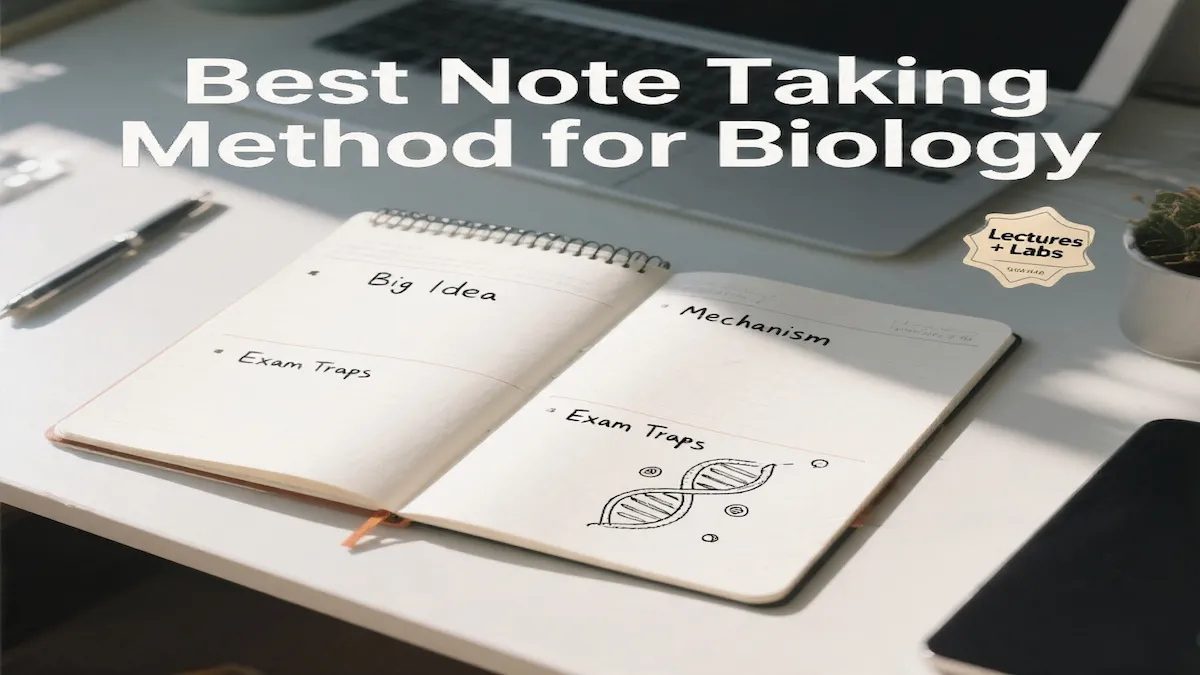
- Best Note Taking Method for Biology: Lectures + Labs System
- 5 Essential Tips for Effective Note-Taking in…