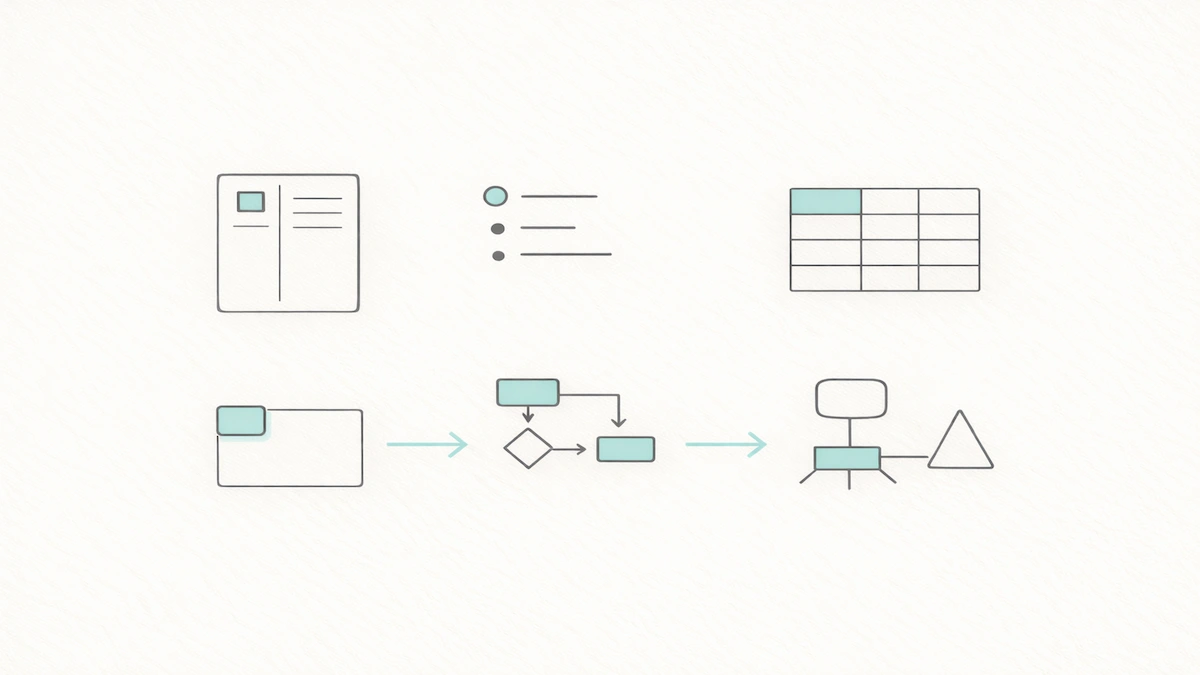

If you’ve ever walked out of a lecture thinking, “What was that all about?”, you’re not alone. University lectures move fast, and your brain can only hold so much at once. That’s exactly where note-taking in university lectures becomes a real superpower: it helps you capture, organize, and actually use what you’re learning.
This is a friendly, practical guide that answers common student questions about note-taking, from laptop notes and methods to strategies and PDF-style summaries.
What is note-taking?
Note-taking is the process of actively listening or reading and then capturing the key ideas in your own words so you can understand, remember, and review them later.
In the context of note-taking in university lectures, that means:
- Picking out the main concepts your professor is explaining
- Writing or typing them in a clear, organized way
- Adding examples, diagrams, or questions to help your future self revise
Good note-taking is not copying everything word-for-word like a human printer. It’s about processing information, not just recording it.
Why is note-taking important for students?
So, why do teachers, professors, and study experts never stop talking about note-taking?
Because for students, especially in university, note-taking:
- Keeps you focused during lectures
- Helps you understand new concepts as you hear them
- Builds a personal study resource that matches how you think
- Saves revision time before exams
- Improves grades and long-term learning
When you’re engaged in note-taking in university lectures, you’re not just listening – you’re thinking, organizing, and making the material your own.
Five importance of note-taking
Here are five key reasons why note-taking matters so much:
- Improves concentration
When you’re taking notes, your brain has a job to do. You’re less likely to zone out, scroll your phone, or daydream. - Boosts understanding
To write something down in your own words, you have to understand it at least a little. That “translation” step deepens your learning. - Strengthens memory
The physical or digital act of writing/typing helps your brain store information. You remember more compared to just listening. - Creates a personal learning tool
Your notes reflect how you think: your examples, your diagrams, your language. That makes them way easier to revise from later. - Supports exam success and assignments
When exams come, good notes mean you’re not starting from scratch. You already have a structured summary of the course.
These five important aspects of note-taking apply whether you’re in a big lecture hall, watching online lectures, or revising from textbooks.
Note-taking methods
There’s no single “perfect” way to take notes. Different courses and different brains benefit from different note-taking methods. Here are some of the most popular ones:
1. Outline Method
Write main ideas as headings and supporting details as indented sub-points in a clear, structured format.
- Main topic
- Subtopic
- Example or detail
- Subtopic
Great for: theory-heavy subjects like history, psychology, or law.
2. Cornell Method
You divide your page into three sections:
- Right side: main notes
- Left side: keywords/questions
- Bottom: summary of the page
Great for: any subject where you’ll revise a lot later – it’s built for review.
3. Mind Mapping
Start with a central idea in the middle of the page and branch out with lines to related keywords, ideas, and images.
Great for: visual learners and subjects with lots of connections (like biology, business, or brainstorming sessions).
4. Charting Method
Set up a table with columns such as Date, Concept, Example, Pros, and Cons, and fill it in as you go.
Great for: courses with comparisons, timelines, or categories (like economics, medicine, or management).
5. Sentence Method
Write each new idea as a separate sentence on its own line.
Great for: fast-moving lectures where you don’t have time to think about structure on the spot.
5 methods of note-taking
To summarize, here are five key note-taking methods you can use in your university lectures:
- Outline Method
- Cornell Method
- Mind Mapping
- Charting Method
- Sentence Method
You don’t have to marry just one. Many students mix methods depending on the course: for example, Cornell for theory, mind maps for revision, and charting for case studies.
How to take lecture notes on a laptop
Many students now prefer taking lecture notes on a laptop, especially in large lecture halls or fast-paced courses. Here’s how to do it effectively without turning your screen into a wall of messy text.
1. Choose the right tool
Use apps that are friendly for note-taking in university lectures, such as:
- Word/Google Docs
- OneNote
- Notion
- Apple Notes
- Obsidian / Evernote
Pick one you’re comfortable with and stick to it for consistency.
2. Create a clear structure before class
- Title: Course name + lecture topic + date
- Add headings for sections from the syllabus or slides.
- Use bullet points instead of long paragraphs.

3. Type in short, clear points
Avoid trying to type every word. Focus on:
- Key definitions
- Formulas
- Examples
- Diagrams (you can sketch them on paper or draw in the app later)
4. Use formatting to your advantage
- Bold for main ideas
- Italics for examples or comments
- Bullet lists for steps or points
- Highlight key exam hints or “important” notes the professor mentions

5. Review and clean your notes soon after class
Right after the lecture (or the same day):
- Fix spelling/typos
- Fill in any gaps while the material is still fresh.
- Add short summaries at the end of each major section.
Digital notes are powerful, but only if they’re organized enough that future-you can actually use them.
The power of note-taking in university lectures PDF
You might have searched for “The power of note-taking in university lectures,” hoping for a simple handout or cheat sheet.
Here’s how you can turn this article – or your own notes – into that perfect PDF:
- Summarize the key benefits of note-taking on one page.
- Add a short list of the 5 methods of note-taking.
- Include a checklist for “Before, During, and After” the lecture:
- Before: skim slides and read the textbook headings.
- During: focus on main ideas, not every word
- After: review, highlight, and make a brief summary
Save it as a PDF, and you’ll have your own quick reference guide on the power of note-taking in university lectures.
Note-taking strategies PDF
When students look for “note-taking strategies PDF”, they’re usually looking for practical, ready-to-use tips. Here are some strategies you can include in or build into a PDF for yourself:
- Prepare before class
Read the lecture title, learning outcomes, or first few pages of the chapter so the content feels familiar. - Listen for signals
Professors often say: “The key point is…”, “Remember this…”, “This is important for the exam…”. Whenever you hear that, write it down. - Use abbreviations and symbols.
- “w/” = with
- “vs” = versus
- “↑” for increase, “↓” for decrease
- →” for leads to
- Leave white space
Don’t fill every corner. Leave gaps so you can add extra details or explanations later. - Summarize in your own words.
At the end of each page or section, write 2–3 sentences summarizing the main idea. This helps turn your notes into a real revision tool.
Put these strategies into a simple two-page layout, export as PDF, and you’ve got a personal “Note-Taking Strategies PDF” tailored to your course.
Final thoughts: building your own system for note-taking in university lectures
There isn’t one “perfect” system. What really matters is that your note-taking in university lectures helps you:
- Stay focused
- Understand concepts
- Remember them later
- Feel more confident in exams and assignments.
Start simple:
- Pick one method (e.g., Cornell or Outline).
- Decide if you’re more comfortable with a paper or a laptop.
- Use the five importance of note-taking as your motivation.
- Experiment for a couple of weeks, then adjust your style.
How to take notes during university lectures?
Use a laptop or notebook for taking notes.u003cbru003eStart with the date and lecture topic at the top of the page.u003cbru003eWrite down main ideas and key points, not everything.u003cbru003eUse bullet points or numbered lists for organization.u003cbru003eHighlight or underline important information.u003cbru003eUse abbreviations and symbols to save time.u003cbru003eLeave space for adding details later.u003cbru003eReview and revise notes after class for clarity.u003cbru003eSummarize each lecture in your own words.u003cbru003eConsider recording lectures (with permission) for review.
What are the 5 R’s of note-taking?
Record u003cbru003eReduce u003cbru003eRecite u003cbru003eReflect u003cbru003eReview
Should you take notes during lecture?
Yes, taking notes during a lecture is beneficial.
Can ChatGPT take notes during a lecture?
No.
This article is licensed under a Creative Commons Attribution-NonCommercial-NoDerivatives 4.0 International License.
[pps_post_list_box layout=”pps_post_list_box_3840″]