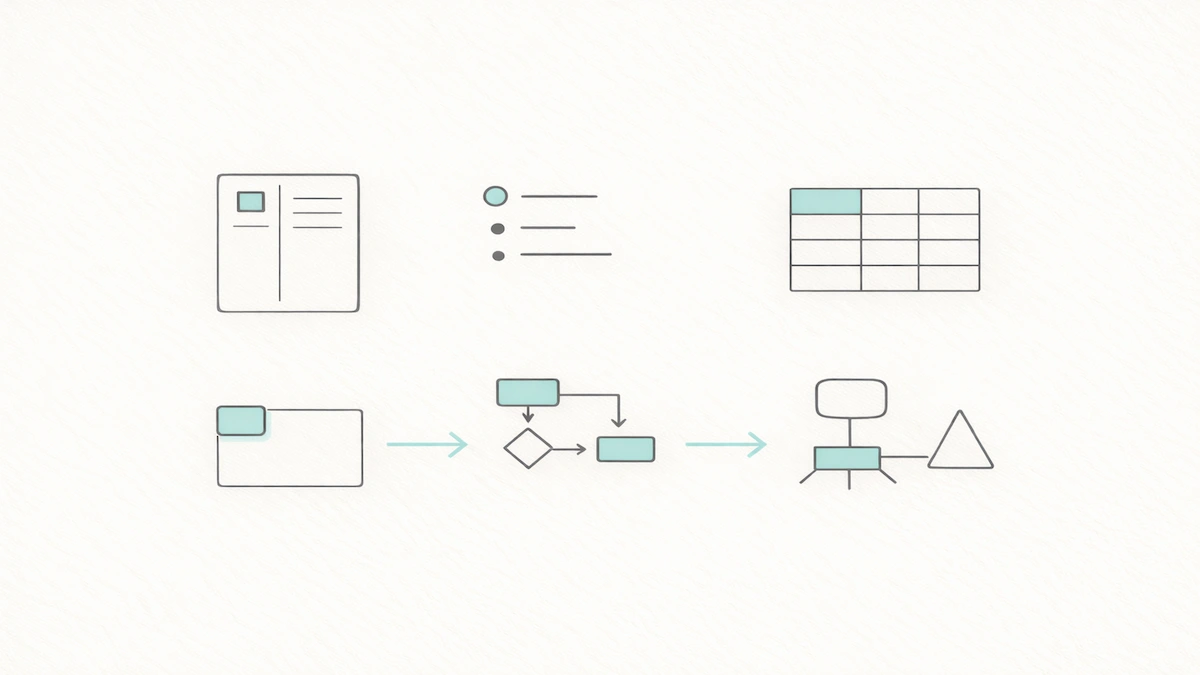
If dates, events, and cause-and-effect details keep blending, Timeline Notes can help. This method turns messy information into a clear sequence, so you can see what happened, when it happened, and why it mattered.
Timeline notes are a study method where you organize information in time order and connect each event, step, or stage to its key detail, consequence, or pattern. They work especially well for history, case studies, scientific processes, and any class where sequence matters.
This guide shows college students how to use timeline notes to study from lecture slides, textbook chapters, discussion notes, and review sheets without making revision harder later.
Quick Start box: “If you only have 10 minutes, do this…”
Open your lecture slides or reading notes and draw one line across a page. Add 5 to 7 major events or stages in order, then write one short note under each point: what happened, why it mattered, and what came next. Spend the last 2 minutes covering the page and recalling the sequence out loud.This turns timeline notes into a fast active-recall study tool.
What Are Timeline Notes?
Timeline notes organize information by order, not solely by topic. Instead of writing long paragraphs, you place key events, stages, or decisions along a line and attach the most useful detail to each one.
This works best when your professor tests sequence, turning points, comparisons across periods, or cause-and-effect links. It is especially helpful when you need exam revision that goes beyond memorizing isolated facts.
When this method works best
Timeline notes work best when the material moves through time, phases, or linked decisions.
- History units with wars, reforms, political movements, or social change
- Case studies that unfold in stages
- Science topics with processes, cycles, or development over time
- Literature courses where plot sequence affects interpretation
- Courses where your instructor asks “what led to this?” or “what changed next?”
A good rule: if mixing up the order would change the meaning, a timeline-based page is probably worth making.
Best subjects and situations
Timeline notes are especially useful in subjects where sequence changes meaning.
In a U.S. history lecture, you might map a reform movement from its early causes to legislation and long-term impact.
In a nursing or business case study, you might track symptoms, decisions, interventions, and outcomes in order.
In a lab-based class, you can use the same structure for a process: setup, reaction, observation, analysis, and conclusion. Even though it is not “history,” the sequence still matters.
The STEP-Line System
Use this repeatable method each time so you do not overthink your notes.
- Scan the source for the major stages or events.
- Tag each point with one key detail and one consequence.
- Enter the points on a simple line in order.
- Probe your memory by covering the page and recalling what comes next.
This is the STEP-Line System: Scan, Tag, Enter, Probe. It keeps your page clean and turns note-taking into retrieval practice instead of passive copying.
Scan
Start with your source material: lecture slides, assigned reading, your lab notebook, or case summary. Look for natural turning points, dates, stages, or decisions.
Do not copy everything. Your first job is to spot the backbone of the topic.
Tag
For each point, add only the most useful note. A good tag answers one of these:
- Why did this happen?
- What changed here?
- Who or what was affected?
- What happened next?
- Why would a professor test this?
This prevents the timeline from becoming crowded.
Enter
Now place the points in order on paper, a tablet, or a digital doc. Leave space between entries so you can add short connections later.
You can use:
- one sentence per point
- a date plus one key idea
- a stage name plus one observation
- arrows for cause-and-effect
Probe
This is where the method becomes a study tool, not just a note format. Cover your page and try to recall:
- the next event
- the cause of a turning point
- the outcome of a choice
- the difference between two nearby stages
That small recall step is what helps the material stick.
How to build a strong study timeline from lectures, readings, and labs
To make strong timeline notes, start with one narrow topic, not an entire course.
Start by choosing one narrow topic, not an entire course. A single chapter, one class session, or one case is enough.
From the lecture slides, pull the professor’s major sequence. From the reading, fill in the missing context. From your own class notes, add the kind of explanation your instructor emphasized in discussion or office hours.
Then compress everything into one page.
Here is a simple build process:
From a lecture
Say your professor covers the Civil Rights Movement. Instead of writing every name and date in paragraph form, build a line with the major events in sequence. Under each point, add one line about significance. That gives you a page you can review before class, between shifts at work, or on the bus ride home.
From a lab or process-heavy class
Suppose you are studying a biology experiment. Your timeline might begin with setup, move to treatment, then to observation, then to data interpretation, and finally to error analysis. In this case, the “timeline” is really a sequence map. It still helps because it reduces confusion during exam revision.
From a case study
In a business or nursing course, use each decision point as a marker. Under it, write the condition, action, and result. This helps you remember not just facts, but reasoning.
Examples for history, case studies, and chronological topics
Example Box: History lecture
You are reviewing a lecture on the American Revolution during midterms week. Instead of rereading 20 pages, you build a one-page sequence that builds to rising tension, major acts, protests, military conflict, and outcomes. Under each point, you add one trigger and one result. During a short study block, you quiz yourself on what caused the next shift.
Example Box: Lab-based course
You have a chemistry practical coming up. You use a sequence page for the experiment: preparation, reagent addition, reaction change, measurement, and conclusion. Then you test yourself on where errors could happen and how each step affects the next one.
Example Box: Part-time job + commuting
You work an evening shift and lose long study blocks during the week. A timeline-style page helps because you can review it in small chunks. On your commute, you recall the order out loud. On a break, you check whether you still remember the turning points without looking.
These examples show why this method works well with active recall and spaced repetition. You are not just storing information. You are rebuilding it from memory.
What to do if you are behind, cramming, or overwhelmed
When you are behind, the goal is not perfect notes. The goal is to recover the topic’s structure quickly.
Today
Choose the most testable unit. Build one bare-bones sequence with 5 to 8 points. Ignore decoration. Use your lecture slides first because they usually reflect what your instructor considers most important. Then do two quick recall rounds.
In the next 48 hours
Make two more one-page sequences for related topics. After that, compare them and look for patterns: repeated causes, turning points, or outcomes. This is where deeper understanding begins to emerge.
If you are cramming, do not keep rewriting the same page. Review, cover, recall, and fix weak spots. That is more useful than making prettier notes at 1:00 a.m.
Mini diagnostic checklist
Use this to see whether your page is study-ready.
Answer yes or no:
- Can I explain the order without looking?
- Can I name at least three turning points?
- Can I explain why each turning point mattered?
- Can I connect one event or stage to the next?
- What would my professor most likely test?
Scoring
- 5 yes answers: Your sequence is solid and ready for retrieval practice.
- 3–4 yes answers: Good start, but add clearer links or significance notes.
- 0–2 yes answers: Your page may be too vague. Rebuild it with fewer points and stronger tags.
Common Timeline Notes Mistakes
1. Putting too much information on one page
Fix: Limit each point to one key detail and one consequence.
2. Copying the textbook instead of compressing it
Fix: Use short phrases, not full paragraphs.
3. Forgetting to add significance
Fix: Ask, “Why would this show up on a test?”
4. Making the sequence but never practicing recall
Fix: Cover the page and rebuild the order from memory.
5. Using this method for topics that are not sequence-based
Fix: Save it for chronological material, processes, and unfolding cases. Use another system for concept-heavy topics that do not depend on order.
Templates/Examples
Simple timeline template
Topic:
Start point:
End point:
5 to 8 major stages/events:
For each stage, write:
- What happened?
- Why does it matter?
- What came next?
Weekly study plan template
Monday: Build one sequence from the lecture slides
Tuesday: Add missing context from reading
Wednesday: Do one recall round from memory
Thursday: Compare two sequences
Friday: Quick self-test before class
Self-quiz script
“First came ____. That mattered because ____. The next turning point was ____. That changed the topic by ____.”
Key Takeaways
- Timeline notes work best when the order changes the meaning.
- Keep each entry short and focused on significance.
- Use the STEP-Line System to stay organized.
- Build from lecture slides first, then add reading support.
- Test yourself by recalling the sequence without looking.
- Use one-page versions when you are behind or overloaded.
- This method works for history, case studies, labs, and process-heavy topics.
FAQ
Are timeline notes only useful for history classes?
No. They are strongest in history, but they also help with case studies, scientific processes, literature plots, and any topic where one stage leads to the next. The key is sequence.
How detailed should my timeline be?
Most students do better when timeline notes stay limited to 5 to 8 major points with short significance notes. Too much detail makes the page harder to review.
Should I make timeline pages by hand or digitally?
Either is fine. Handwritten pages can help you slow down and simplify. Digital versions are easier to edit after class. The better option is the one you will actually review.
Can this method replace all my other notes?
Probably not. It is best used as a study tool for material with a heavy sequence. For broad theory or dense definitions, combine them with other note styles and retrieval practice prompts.
How often should I review a timeline page?
Review it soon after class, again within a day or two, and once more before a quiz or exam. Short, repeated reviews usually work better than a single long reread.
Conclusion
If you study topics where sequence, turning points, and cause-and-effect matter, timeline notes can make your review sessions clearer, faster, and easier to review.
. Keep the page simple, use the STEP-Line System, and focus on recall so the material becomes easier to explain under test pressure.