
Calculus is one of those classes where the right calculator can make graphing functions, checking numerical results, and exploring derivatives and integrals much easier—but buying the most advanced model isn’t necessarily the right move.
The best graphing calculators for calculus depend on your course and its calculator rules. A TI-84 Plus CE may cover what most students need, while advanced coursework can benefit from a TI-Nspire. A CAS calculator adds symbolic capabilities, but that can also make it unsuitable for certain classes or exams.
This guide compares five Texas Instruments and Casio options for AP Calculus AB/BC, Calculus I and II, and calculus-heavy college majors. Always check your teacher’s, professor’s, school’s, and relevant exam rules before buying.
Quick Verdict
- Best overall for most calculus students: TI-84 Plus CE. A practical non-CAS option for graphing, numerical calculus, and general college math. It especially makes sense when your instructor teaches with the TI-84 family. Trade-off: no symbolic CAS. [Check Current Price]
- Best for advanced calculus: TI-Nspire CX II CAS. Its computer algebra system adds symbolic capabilities that can be valuable in advanced mathematics. Trade-off: CAS isn’t permitted in every class or testing situation. [Check Current Price]
- Best alternative for visual graphing: Casio fx-CG50 PRIZM. A color graphing alternative for students who prefer Casio’s platform. Trade-off: classroom instructions may be written for a different calculator family. [Check Current Price]
- Best advanced graphing without CAS: TI-Nspire CX II. It provides the TI-Nspire platform without the CAS functionality of the CX II CAS. Trade-off: don’t pay for its more advanced environment if a conventional graphing calculator meets your needs. [Check Current Price]
- Best budget graphing calculator: Casio fx-9750GIII. A value-focused choice for students who need graphing and numerical calculus tools without prioritizing a color display. Trade-off: simpler display than the color models here. [Check Current Price]
Best Graphing Calculators for Calculus Compared
| Calculator | Type | Calculus fit | Position | CTA |
|---|---|---|---|---|
| TI-84 Plus CE | Non-CAS graphing | Most AP/college calculus | Mid-range | [Check Price] |
| TI-Nspire CX II CAS | CAS graphing | Advanced calculus | Premium | [See Price] |
| Casio fx-CG50 | Non-CAS graphing | Visual graphing | Mid-range | [Check Price] |
| TI-Nspire CX II | Non-CAS graphing | Advanced graphing | Premium | [See Price] |
| Casio fx-9750GIII | Non-CAS graphing | Value-focused calculus | Budget | [Check Price] |
Price positions are relative categories for this guide rather than current retailer prices. Prices can change, so verify the current cost before deciding.
1. Texas Instruments TI-84 Plus CE
Student Snapshot: The TI-84 Plus CE is the safest starting point in this comparison for students who want a traditional, non-CAS graphing calculator for calculus. It’s relevant to AP Calculus AB/BC, introductory college calculus, and students who will continue into other quantitative courses.
Why Calculus Students May Like It
Texas Instruments lists the TI-84 Plus CE family for subjects that include calculus. Its graphing functionality lets students work with functions visually, while numerical derivative and integral functionality supports common calculus calculations.
You also get tables and statistical functionality, so the calculator remains useful outside calculus.
An important practical advantage is that the TI-84 family is a conventional graphing-calculator platform. If your teacher or professor demonstrates TI-84 keystrokes, using the same family can reduce the amount of interface translation you have to do during class.
That doesn’t mean everyone should buy one. If you specifically need symbolic manipulation, look at a CAS model instead.
Key Features
According to TI, the current TI-84 Plus CE family includes a color display, rechargeable battery, graphing and statistics capabilities, and numerical calculus functionality. The current Python edition also supports Python programming.
Pros:
- Graphing and function-table capabilities
- Numerical derivative and integral functionality
- Color display
- Statistics functionality
- Non-CAS design may suit courses where CAS isn’t wanted
Cons:
- No CAS for symbolic calculus
- More functionality than students in calculator-restricted courses can use
- Instructor or exam rules still determine whether it’s appropriate
Buy This If: You want a conventional graphing calculator that covers the needs of many AP and introductory college calculus courses.
Skip This If: You specifically need symbolic algebra/calculus or your class specifies another model.
Key Trade-Off: It balances calculus functionality with a conventional non-CAS design, but gives up the symbolic capabilities of the TI-Nspire CX II CAS.

2. Texas Instruments TI-Nspire CX II CAS
Student Snapshot: The TI-Nspire CX II CAS is the specialist option for students who genuinely need a computer algebra system. It’s worth investigating for advanced math, engineering, or other coursework where symbolic calculation is useful and explicitly permitted.
Why Calculus Students May Like It
The big difference is CAS.
A CAS can work symbolically with mathematical expressions rather than being limited to numerical evaluation. That distinction matters when you’re comparing calculators for derivatives and integrals: symbolic capabilities are fundamentally different from calculators designed primarily for numerical calculus operations.
The TI-Nspire environment also combines graphing, calculations, geometry, statistics, and other mathematical tools.
That power comes with an important qualification. You shouldn’t choose the CX II CAS solely because it has the longest feature list. CAS capabilities can conflict with specific course or exam restrictions.
For students who are allowed and expected to use CAS, however, it fills a role the other calculators in this comparison don’t.
Key Features
TI documents the CX II CAS with a color display, rechargeable battery, graphing, statistics, geometry, programming functionality, and a computer algebra system capable of symbolic operations.
Pros:
- CAS for symbolic mathematics
- Advanced graphing functionality
- Useful for higher-level mathematical work
- Statistics and geometry functionality
- Rechargeable battery
Cons:
- CAS may be prohibited in some courses or testing situations
- Can be unnecessary for introductory calculus
- Premium choice compared with simpler graphing calculators
Buy This If: Your coursework benefits from symbolic manipulation and your calculator rules permit CAS.
Skip This If: Your class or exam prohibits CAS, or you just need straightforward graphing and numerical calculus.
Key Trade-Off: CAS provides substantially greater symbolic capability but can also make this calculator less broadly acceptable under calculator restrictions.

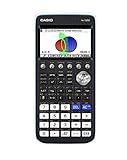
3. Casio fx-CG50 PRIZM
Student Snapshot: The Casio fx-CG50 is worth considering if you want a color graphing calculator for calculus but don’t necessarily want the TI-84 or TI-Nspire interface.
Why Calculus Students May Like It
Calculus is easier to reason about when you can connect equations to their graphs. A graphing calculator can help students investigate function behavior and visually explore concepts involving slopes, extrema, intersections, and other features relevant to calculus.
Casio’s fx-CG50 is built around a high-resolution color display and graphical functionality. Casio also documents numerical differentiation and integration capabilities for the model, giving it the core numerical tools relevant to calculus coursework.
The important purchasing question is classroom fit.
If your instructor provides step-by-step calculator instructions for Texas Instruments hardware, you’ll have to translate those steps to Casio’s menus and commands. That can be perfectly manageable, but it’s worth knowing before you buy.
Key Features
Casio documents the fx-CG50 with a high-resolution color display, graphing capabilities, numerical differentiation and integration, statistics, and other mathematical functions.
Pros:
- High-resolution color display
- Strong graphing focus
- Numerical calculus functionality
- Statistics functionality
- Alternative to TI’s graphing platforms
Cons:
- May require translating TI-specific classroom instructions
- No CAS
- Color functionality isn’t necessary for every calculus student
Buy This If: Visual graphing matters to you and you prefer Casio’s graphing platform.
Skip This If: Your instructor requires or strongly structures lessons around another model, or you need CAS.
Key Trade-Off: You get a feature-rich color graphing environment, but it may not match the calculator workflow used by your instructor.
4. Texas Instruments TI-Nspire CX II
Student Snapshot: Don’t confuse this calculator with the TI-Nspire CX II CAS. The regular TI-Nspire CX II offers the Nspire platform without the computer algebra system, making it worth considering for students who want advanced graphing functionality but don’t need—or aren’t permitted to use—CAS.
Why Calculus Students May Like It
The CX II sits in an interesting position between a conventional graphing calculator such as the TI-84 Plus CE and the CAS-equipped CX II CAS.
TI lists the TI-Nspire CX II platform as appropriate for calculus and other math and science subjects. Its environment integrates graphs, calculations, geometry, lists and spreadsheets, data and statistics, and notes.
That interconnected environment can appeal to students who want more than a traditional graphing-calculator interface.
But sophistication isn’t automatically useful. If your course mainly requires straightforward function graphing and numerical calculations, the TI-84 Plus CE or another conventional graphing calculator may be the more practical purchase.
Key Features
According to Texas Instruments, the non-CAS TI-Nspire CX II provides a color display and rechargeable battery alongside graphing, mathematical, geometry, and statistical applications. It does not provide the CAS functionality found on the CX II CAS.
Pros:
- Advanced non-CAS graphing platform
- Color display
- Multiple integrated math applications
- Statistics and geometry tools
- Rechargeable battery
Cons:
- No symbolic CAS
- More advanced environment than some introductory students need
- Students following TI-84-specific classroom instructions may face an interface mismatch
Buy This If: You want the TI-Nspire environment but specifically don’t need the CX II CAS model.
Skip This If: A traditional graphing calculator covers your coursework, or symbolic CAS is actually required.
Key Trade-Off: You gain the Nspire interface and advanced graphing environment without gaining symbolic CAS.
No products found.
5. Casio fx-9750GIII
Student Snapshot: The Casio fx-9750GIII is the budget-oriented pick for calculus students who need real graphing capabilities but don’t see a reason to pay extra for a color display or CAS.
Why Calculus Students May Like It
Calculus doesn’t inherently require a premium graphing calculator.
What matters is whether the calculator can handle the functions required by your course and whether you’re permitted to use it. The fx-9750GIII covers graphing and numerical calculus functionality while using a simpler monochrome display.
Casio documents differentiation and integration capabilities alongside graphing, tables, equations, and statistical functionality. That’s a relevant feature set for students working through functions and numerical calculations in introductory calculus.
The savings-oriented approach does involve compromises. It won’t provide the color visualization of the fx-CG50, and it doesn’t provide the symbolic CAS functionality of the TI-Nspire CX II CAS.
For a student who doesn’t need either, those omissions can be reasonable rather than problematic.
Key Features
The fx-9750GIII provides graphing, table, statistical, equation, and numerical differentiation and integration functionality, with a monochrome display.
Pros:
- Graphing functionality
- Numerical differentiation and integration
- Function tables
- Statistics functionality
- Budget-oriented option within this comparison
Cons:
- Monochrome instead of color display
- No CAS
- Interface may not match TI-based classroom instructions
Buy This If: You want to keep spending down while still getting graphing and numerical calculus tools.
Skip This If: You specifically value color graphing, need CAS, or your course requires another calculator.
Key Trade-Off: It prioritizes core graphing functionality and value over a color screen and higher-end features.

How to Choose the Best Graphing Calculator for Calculus
Calculus can make advanced calculator features sound essential when many aren’t. Start with your course requirements, then pay for the capabilities you’ll actually use.
Check Calculator Rules Before Anything Else
Your professor, teacher, department, or exam rules should take priority over any general buying recommendation.
AP students should check the current College Board calculator policy for their specific AP exam rather than assuming a calculator is permitted because it is marketed for calculus. College students should check their syllabus or ask their instructor.
This matters particularly with CAS calculators. A calculator that is excellent for unrestricted homework can still be the wrong purchase if you can’t use it on your exams.
Numerical Calculus vs. CAS
This distinction can save you from overspending.
Graphing calculators such as the TI-84 Plus CE can perform numerical calculus operations. For example, numerical integration produces a numerical result based on the specified function and interval.
A computer algebra system goes further by manipulating expressions symbolically. That’s the defining advantage of the TI-Nspire CX II CAS in this comparison.
You don’t automatically need CAS for Calculus I, Calculus II, or AP Calculus. Buy it when your course benefits from it and permits it, not simply because it’s more advanced.
Graphing and Function Tables Matter
Calculus isn’t only about finding answers. Understanding how a function behaves is central to the subject.
Being able to graph functions and inspect tables can help you explore concepts such as local behavior, rates of change, and the numerical behavior of functions near particular values. A good graphing calculator for calculus should make these everyday operations practical.
A color screen can make visual distinctions easier, but color isn’t a requirement for doing calculus.
Don’t Buy Based on Derivatives and Integrals Alone
All five models here provide calculus-relevant capabilities, but they don’t provide them in exactly the same way.
Ask what your course expects you to do manually, what you’re allowed to calculate numerically, and whether symbolic computation is permitted. Learning calculus still requires understanding the mathematical method even when a calculator can evaluate the result.
Consider What Comes After Calculus
College students should also look ahead at their degree requirements.
Engineering, physics, mathematics, computer science, statistics, and other quantitative programs may involve additional calculator-heavy coursework. A calculator that works across several classes can offer better value than buying solely around one semester.
That doesn’t mean buying the most expensive model. Compatibility with your future courses matters more than maximum functionality.
Ease of Use Can Matter More Than Extra Features
A graphing calculator isn’t especially helpful if you’re searching through menus during a timed exam.
Consider which platform your instructor demonstrates. If lectures and worksheets use TI-84 instructions, a TI-84 Plus CE may be convenient. If your class doesn’t depend on calculator-specific instructions, Casio becomes easier to consider on features and value alone.
AP Calculus vs. College Calculus
AP Calculus AB/BC students need to pay particular attention to College Board’s current calculator policies. Permitted calculator models and exam rules are external requirements and can change, so verify them directly with the College Board for your exam year.
College calculus is less standardized. One professor may encourage graphing-calculator use, another may prohibit calculators on portions of exams, and another may allow graphing calculators but restrict CAS.
That variability is why there isn’t one best calculator for every calculus student.
Which Calculus Calculator Fits You?
- If you’re taking AP Calculus AB/BC or introductory college calculus and want a conventional all-around graphing model → consider the TI-84 Plus CE.
- If you’re doing advanced mathematics and genuinely need symbolic calculation → consider the TI-Nspire CX II CAS, after confirming CAS is permitted.
- If you prioritize a color display and prefer Casio’s graphing platform → consider the Casio fx-CG50.
- If you want the more advanced TI-Nspire environment without CAS → consider the TI-Nspire CX II.
- If budget matters more than a color display → consider the Casio fx-9750GIII.
- If your teacher or professor specifies a particular calculator → follow that guidance rather than buying a more advanced model.
- If you’re buying specifically for an AP exam → verify the calculator against the College Board’s current exam policy before ordering.